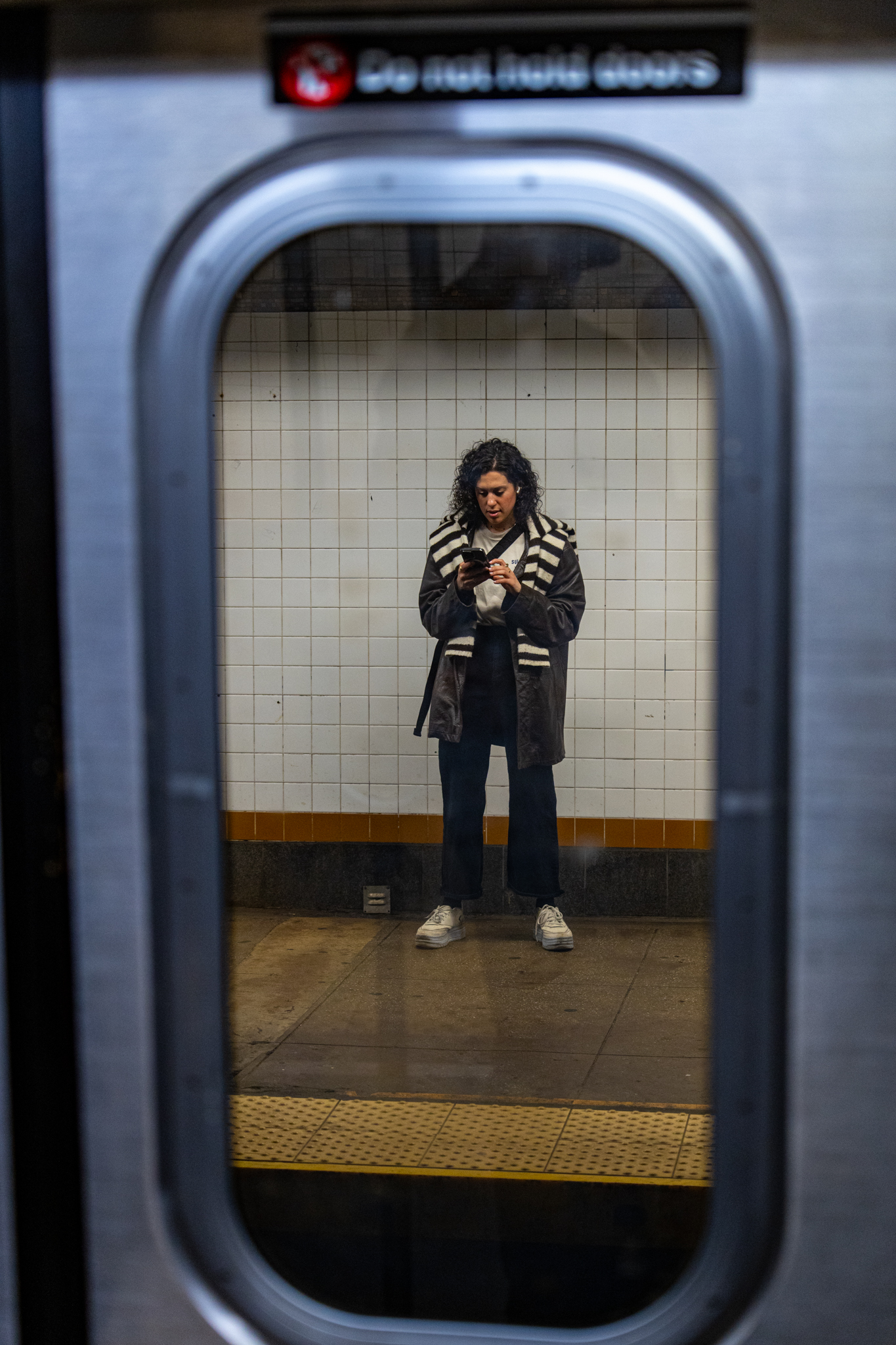
You call home looking forward to the conversation. You want to hear a familiar voice, find out what is happening, share a little about your own life, and for a moment feel closer again. Then the call ends and you feel worse than you did before it began. Not necessarily because anything bad happened. Perhaps nobody said anything hurtful, nobody argued, and nobody rejected you. Yet something remains - tension, sadness, or the feeling that it is becoming harder to truly meet one another, even when you talk regularly.
Perhaps that is why these conversations can sometimes hurt more than missing someone. Missing them is, in a way, simpler. It says: I miss their presence, our shared moments, the everyday life that cannot be recreated over the phone. You understand where that pain comes from. It becomes more complicated when you begin to feel that distance is not the only thing between you anymore - that you are now living in two somewhat different worlds.
You tell them about your life abroad, but some things sound abstract from where they are. Problems that can take half your day or keep you awake at night may sound to someone in Poland like a short story from a distant country. Government offices, paperwork, healthcare, work, your child's school, language, everyday cultural differences - all of these create a reality that is difficult to fully experience from the other side of a phone call.
They have their own lives too. Family events, everyday problems, illnesses, renovations, conflicts, ordinary Mondays and Sundays. Things that were once part of your daily life now happen without you. You do not know every story from the beginning, you may not remember every new person, and sometimes you realize that someone is talking about an event that everyone else in the family already knows while you need to ask for the background. That is when a particularly difficult feeling can appear: you still belong to the family, but you no longer participate in its life in quite the same way.
This does not have to mean that you are less close or that anyone stopped trying. Distance simply changes relationships. When you live nearby, many things happen almost accidentally. You know who is having a bad day because you can see it over coffee. You know your parents are tired before they even tell you what is wrong. You run into your siblings, hear family stories as they unfold, and do not need to organize a special conversation just to remain part of someone's life.
When you live abroad, each of those small pieces of information begins to require effort. You have to call, write, find time despite the difference in time zones, and remember events happening thousands of miles away. Even then, a huge part of everyday life remains invisible to you.
You change too. You learn to function in another environment, meet different people, become familiar with new customs, and begin to see some things from another perspective. Behaviors that once seemed completely normal may no longer feel that way. Other things only become visible after you discover that life can be organized differently. And then something may appear in conversations with your family that you never expected when you first moved abroad: you still speak the same language, yet sometimes it is difficult to explain what you actually feel.
You may talk about something important and hear in response, “but you're doing well,” “you were the one who wanted to leave,” “everyone has problems,” or “don't exaggerate, other people have it worse.” Most often, this is not a lack of love. The other person may simply not know how to respond. They see fragments of your life: photographs, travel stories, your home, your job, your children, places they themselves might like to visit one day. From the outside, life abroad can look very different from how it feels from within.
You, in turn, may begin filtering what you share. You do not want to worry your parents, so you leave out the problems. You do not want to explain certain things again, so you shorten the story. You do not want to hear that “you could have stayed in Poland,” so you avoid the subjects that hurt most. The conversation continues, but part of it becomes safely superficial. “How are you?” “Good. And you?” “Good too.” And sometimes that word “good” contains a great deal that nobody talks about anymore.
This is why you can sometimes feel lonelier after the conversation than before it. Before the call, you missed the people you love. After the call, you may begin missing the relationship you once had with them. The time when you did not need to explain the entire context in order to be understood, when one look was enough for someone to know something was wrong, when you knew all of their stories and they knew yours.
Living abroad does not end those relationships, but it often changes their form. And that process happens on both sides. Family in Poland also has to learn how to have a relationship with someone whose life is happening somewhere else. They may feel that they know less and less about your everyday life. They may worry that you will build a life in which there is less room for them. Parents can be proud of your success and at the same time deeply sad that their grandchildren are growing up far away. Siblings may understand your decision while still feeling frustrated that more of the practical responsibilities surrounding the family remained with them.
These emotions are rarely black and white. You can love someone deeply and still feel resentment. You can be happy for someone and envy their life at the same time. A parent can support a daughter's decision to move abroad while still hoping that one day she will come back. When these conflicting feelings enter conversations, it is easy to see them as evidence that the relationship is deteriorating, when sometimes they are simply a consequence of everyone trying to find their place in a situation they have never had to navigate before.
When I moved to the United States, I began to see more clearly that distance changes not only the way we miss people, but also the way we are with them. You can no longer be part of every Sunday, every family event, and every ordinary day. The relationship begins to require more intention. You have to consciously make time, ask questions, listen, return to subjects, and sometimes say things out loud that once never needed to be said.
That is not always easy, but it does not mean closeness has to disappear. Perhaps what needs to change is the expectation that the relationship will look exactly as it did before you left. Relationships across countries often need new rules. Sometimes it helps to say directly, “when you respond to me that way, I feel misunderstood.” At other times, you may need to accept that not every part of your life can be fully understood by someone who is not experiencing it. A friend who also lives abroad may understand some things better than the person closest to you in Poland, and that does not betray the old relationship. One person does not have to meet every emotional need we have.
Perhaps the most important distinction is between geographic distance and emotional distance. Thousands of miles do not automatically destroy closeness, but a relationship left without attention can gradually begin to live mostly through memories. You do not have to choose between your new life and your family in Poland. You can build a bridge between the two worlds, but the bridge will not build itself. It needs conversations that are about more than exchanging information. It needs curiosity about who the other person has become during the years apart and acceptance that both sides have changed. Neither person can return exactly to the relationship that existed before the move.
Perhaps that is when talking to family stops being an attempt to recover what used to exist and becomes a way of building something new. Because sometimes what hurts most is not simply being far away. What hurts most is the fear that the people who were once closest to you may no longer really know who you are.
What can I do so that we can get to know each other again in the lives we all have today?
It will not turn back time or eliminate the distance. But it may make it possible for there to remain a place between those two worlds where you can still truly meet.
COACHING FOR LIFE ABROAD
Not every distance can be reduced by miles.
If living between two worlds is beginning to affect your relationships, your sense of closeness, or the way you see your own place in life, coaching can give you space to look at it more calmly.
Coaching for life abroad →COACHING NA EMIGRACJI
Nie każdą odległość da się zmniejszyć kilometrami.
Jeśli życie pomiędzy dwoma światami zaczyna wpływać na Twoje relacje, poczucie bliskości albo sposób, w jaki widzisz swoje miejsce, możesz przyjrzeć się temu spokojnie podczas rozmowy coachingowej.
Coaching na emigracji →